

Let's be honest: puns are divisive. They either earn a belly laugh or an eye-roll so dramatic it could generate its own weather system. There's rarely an in-between.
I fall firmly in the "love them" camp. And I think the reason why has less to do with the jokes themselves and more to do with a sweaty, terrifying, and completely invigorating theater I spent most of my weeks in as a teenager.
I used to do improv. Before every show, my whole team would pile into my parents' house for pizza, and then we'd head to the theater. Without fail, the pre-show nerves would hit me, and I'd get sick. We quickly learned this was actually a good thing. On the nights I got sick, we crushed it. The one night I felt totally calm? We bombed. Hard. My team's ridiculous conclusion was that my throwing up was basically a requirement for a good show.
What I realize now is that the nerves came from a place of respect—for the audience, for my team, and for the creative energy in the room. Once the stage lights came up and the house lights went down, that terror always melted into something magical. The key to improv isn't just about being funny; it's about mental agility. It's about taking whatever gets thrown at you—"You're a pirate at a dental convention!"—and instantly finding the unexpected angle that makes it work. Improv trains your brain to spot connections that aren't obvious, to see potential where others see randomness. You learn to flip ordinary situations into something surprising.
So what does any of this have to do with the illustrated puns I create as an artist? Everything.
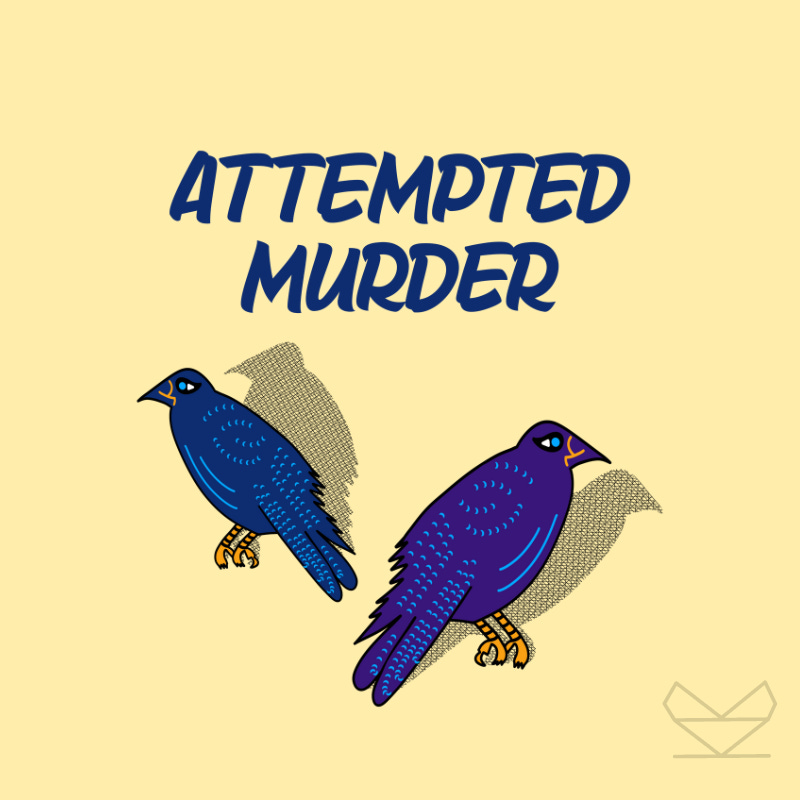
The same mental muscle that makes improv work is the one that makes a pun land. The magic, in both cases, comes from seeing a familiar thing in a completely new light. A good improv scene takes an audience suggestion and spins it in a direction nobody—not even the person who yelled it from the crowd—could have predicted. A good pun does the exact same thing with language. It takes a phrase you've heard a thousand times and suddenly twists it into something unexpected—like noticing that two crows fall short of being a murder, which makes them an "Attempted Murder.”
This is what I think the people who hate puns are missing. The beauty isn't necessarily the groan-worthy joke itself. It's the intelligence behind it. It's the flash of wit required to see a hidden connection that's been sitting in plain sight all along. A few years ago, when I was really sick, a friend sent me "Have a Little Pun" by Frida Clements. Page after page, it gave me much-needed belly laughs. Even if you don't find the joke funny, you have to admire the brain behind the wordplay.
As a Vancouver-based artist, most of my work celebrates the Pacific Northwest—the mountains, the rain, the wildlife that makes this place feel like home. But I also can't resist creating pun illustrations, even though they always feel slightly disconnected from my more "serious" regional pieces. There's this nagging voice that whispers maybe puns are too unserious, too silly for someone trying to establish themselves as a real artist.
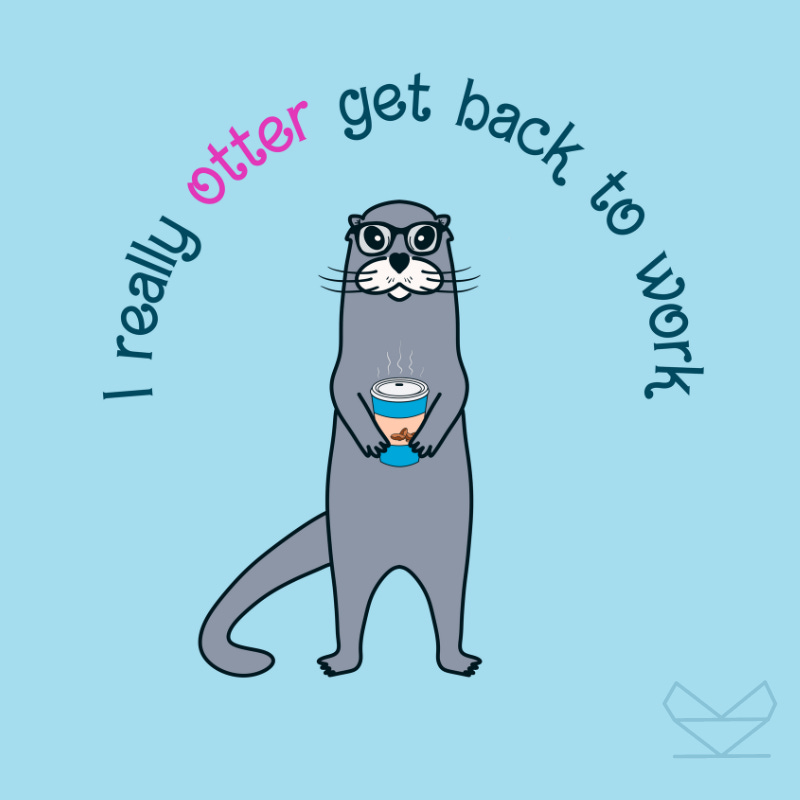
But I've discovered ways to bridge that gap. My "Attempted Murder" features the crows that are everywhere in Vancouver. That otter taking a coffee break? Otters are as Pacific Northwest as it gets. These puns aren't separate from my sense of place—they're another way of celebrating it.
Still, I'll be honest: nobody's buying my pun art. My Vancouver landscapes get attention, but the wordplay pieces? They sit quietly in my online shop, admired mainly by me. I've printed so many of them that they cover the walls of my house, my shower curtain, everywhere I look. I love seeing them there, but I'm definitely still searching for my audience.
And that brings me to the bigger struggle that I think many creative people face. We put pressure on ourselves to be "serious" in order to be taken seriously. We second-guess the parts of our work that feel too playful, too niche, too weird. Getting noticed as an independent artist online is incredibly difficult without a big marketing budget, and it's tempting to stick only with what seems to have broader appeal.
But I keep coming back to those improv lessons about the appeal of surprising your audience by taking the art in an unexpected direction. What if the answer isn't to abandon the things that make us unique, but to trust them more?
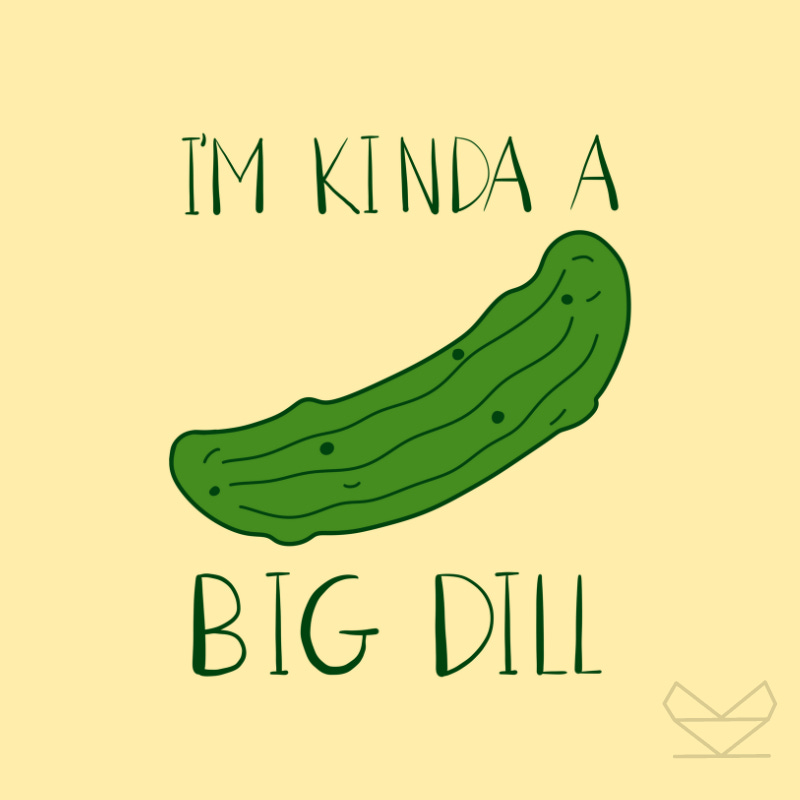
I believe there are people out there who will appreciate pun art—fellow nerds who see the intelligence in wordplay and smile at weird pickle-themed art. I just need to trust that if I keep putting my ideas out there, sharing them far and wide, eventually my work will find the right people. After all, every time I look at my portfolio, I'm reminded that at least one person in the world thinks this stuff is brilliant.
Ultimately, life is too short to pretend to be something you're not. There is no such thing as art that's universally admired, so I might as well create things that I genuinely love. In short, I’m just gonna let my weird light shine bright, so the other weirdos know where to find me.
The great pun debate: where do you stand? Are you a lover or a hater? Tell me why in the comments!
100%! I'm always suspicious of people who don't crack a slight smile at a pun, even if the groan while doing so.
Here to join you in the weirdom!