

Here's something that might sound a little judgy, but I promise it's coming from a place of love: most souvenir merch makes me cringe.
Now, before you grab your pitchforks—I'm not throwing shade at other artists. Art is wildly subjective, and there's no such thing as creating something that everyone will love. But after nearly two decades of calling Vancouver home, I kept finding myself walking by souvenir shops thinking, "I love this city, but I wouldn't wear any of this."
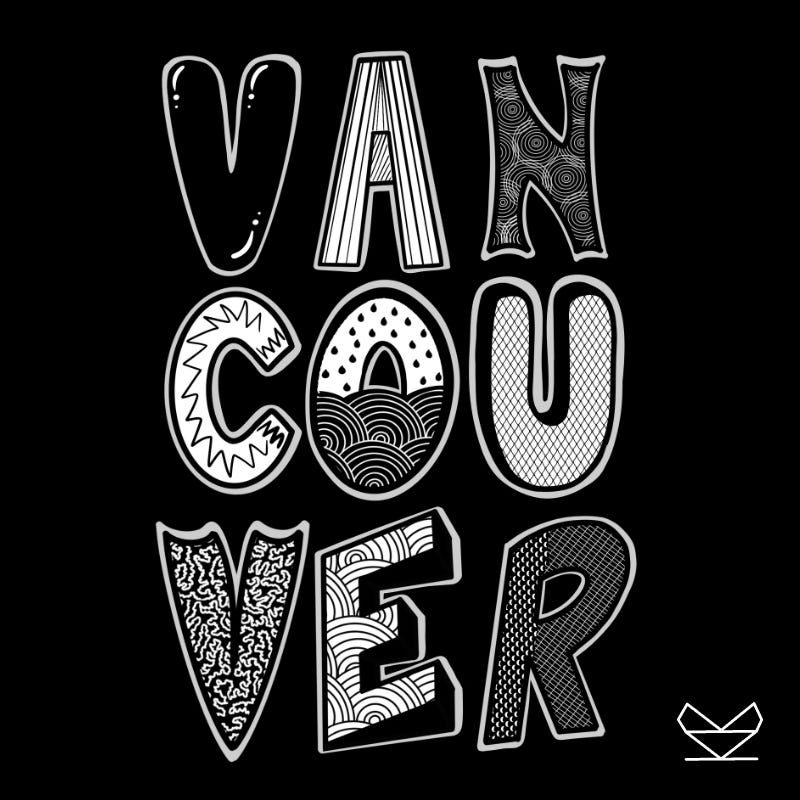
So I decided to create the local pride gear that I actually wanted to wear. Namely a big bold typography print worthy of the back of a hoodie.
The Library That Changed Everything
But here's where this story gets interesting. Before I even touched that design, I did something that felt like overkill at the time: I created a letter library.
After taking a lettering course a few months back, I went through the entire alphabet and drew 9 versions of every single letter. That's 234 individual letters, each with its own personality. Blocky ones, cursive ones, angular ones—the whole range.
At the time, it felt like homework. Maybe even a little excessive.
But when I finally sat down to create my graffiti-style Vancouver typography…pure magic. Instead of staring at a blank page wondering how to make a "V" that felt cool and gritty, I had this whole buffet of options. I could flip through my library and think, "Oh, I want the V to look like this and the O to look like that."
What could have been hours of creative paralysis became a fun puzzle of mixing and matching.
When Everything Goes Wrong (Twice)
Of course, nothing creative ever goes smoothly.
First disaster: I got to the very end of the design—feeling proud and accomplished—only to realize I'd built the entire thing on a 3000x3000 pixel canvas instead of the 7500x7500 I needed. Basically, I'd created something that would look great on a postage stamp but terrible on a hoodie.
I had to start from scratch, and embarrassingly this is not the first time I’ve made this mistake.
Second disaster: Even after rebuilding it perfectly, I discovered the design looked amazing on every color except black. Half the letters just disappeared into the background. Cue more trial and error, adding white outlines, testing on different colors until I found a solution that actually made it look as good, if not better on dark backgrounds.
Here's what I learned during those frustrating moments of rebuilding and problem-solving: having that letter library didn't just save me time—it saved my sanity. I wasn't starting with a blank page and a panic attack. I was working with familiar building blocks.
The Shortcut That Isn't Really a Shortcut
The funny thing about calling my letter library a "shortcut" is that it wasn't actually faster upfront. Those 234 letters took well over a month to create. But every design since then? So much easier.
I've applied the same white outline technique to other pieces now, including a Vancouver skyline design that ran into similar background issues. Because I'd already solved that problem once, I knew exactly how to handle it.
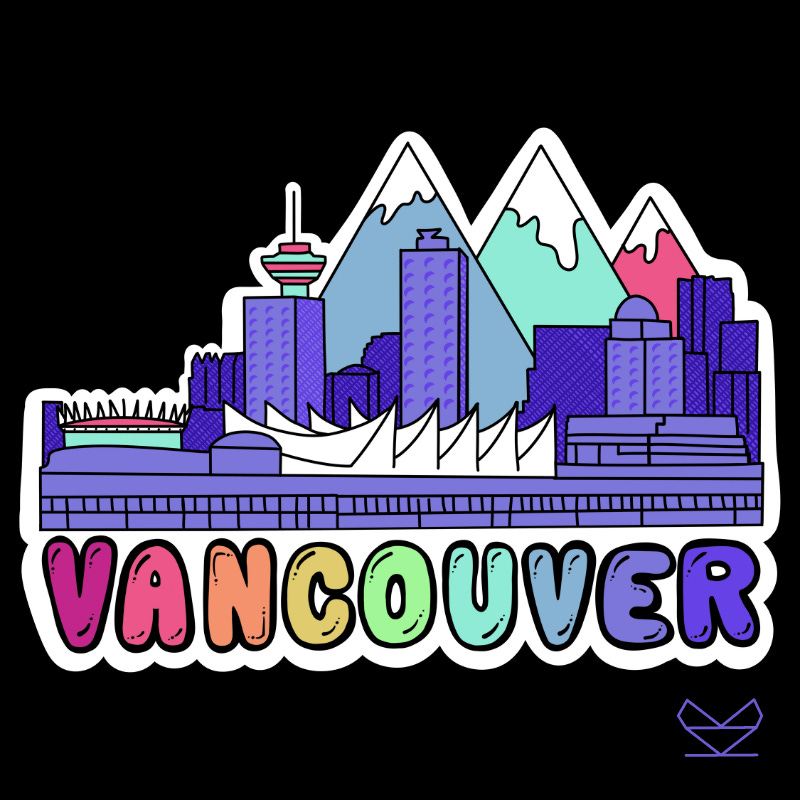
And I've learned something about my own style preferences too—turns out I gravitate heavily toward those blocky letters rather than the cursive ones. Good to know for future library expansion.
Building Your Creative Infrastructure
The bigger lesson here isn't really about letters or even design. It's about building systems that make your future self's life easier.
That letter library? It's my creative infrastructure. Instead of reinventing the wheel every time I need to hand-letter something, I've got a foundation to build from. It's like having a well-stocked kitchen versus trying to cook a meal when your pantry is empty.
And I use the same approach to building repeatable, reusable systems in my consulting work too. Whenever I’m creating a deliverable that I haven’t built before I always add a step at the end to reverse engineer it to create a generic template that I can repurpose in the future. If it’s complicated, I’ll sometimes make a loom video walking through all the steps required to create a quality final product - which I of course link to in the template. This saves so much time and mental load the next time I have to create something similar. I always say it’s a gift for tomorrow Katie.
Sure, building these systems takes time upfront. But the payoff isn't just efficiency—it's confidence. When you know you have tools and solutions ready to go, you're more willing to take creative risks and push through the inevitable frustrations.
The Vancouver design that was supposed to be "just for the back of a hoodie" ended up teaching me more about my process, my preferences, and my problem-solving abilities than I expected. And it all started with doing what felt like unnecessary homework.
Now I've got a brand spank’n new design that actually makes me proud to rep my city—bold, gritty, and cool enough that I'd genuinely choose to wear it. Plus a creative system that's already paying dividends on every project since.
Sometimes the best shortcuts are the ones that don't look like shortcuts at all.
I'd love to hear about the systems and shortcuts you've built that ended up saving your butt later.
Brilliant!