

Lately, I’ve been thinking a lot about the amount of online noise and how difficult it can be to find your audience. Then, in the span of a week, I came across two different Substack posts—one by @commonplacezines and the other by @davidspeeduk—that mentioned the idea of creating a mini-zine to connect with local audiences. They each talked about how, in our increasingly digital world, a great way to cut through the noise is to get offline and bring your art directly to people where they are.
This idea really resonated with me, especially since I'm actively looking for ways to engage with shops, galleries, and the local artist community. The idea of a zine is also very nostalgic for me. Growing up in the 90s, zines were all the rage. My friends and I created a few, but the real joy was finding zines created by others. Some were anonymous, others weren’t, but it was always thrilling to find a new issue lying around at school or a local shop. There was a real sense of community and intimacy in reading a zine you knew was printed at home with virtually zero budget but a whole lot of love. This whole project has felt like a tribute to a younger me, and I’m loving it.
Finding the Rhythm
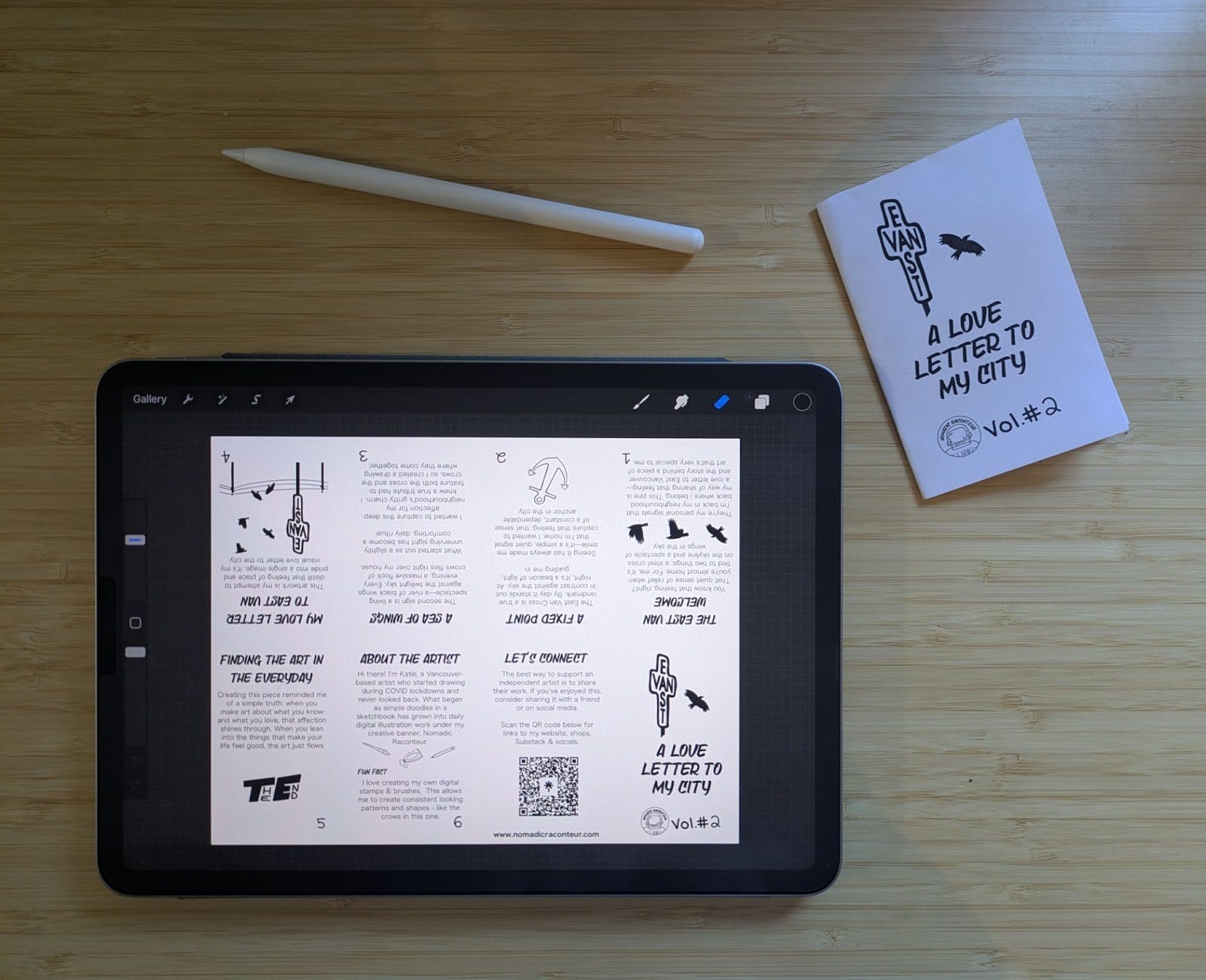
I decided to create the zines by repurposing my existing Substack articles so I wouldn't have to start from scratch. The first major hurdle was taking a long-form article and condensing it into a much more digestible format. The second challenge was making sure there was enough space for art. A wall of text can be boring, and I wanted to break it up with my designs.
The moment it all clicked was when I created a basic layout and printed it on a single sheet of 8.5x11 paper. I folded it into the correct shape and suddenly, I could see what my idea would look like in the real world. It was a tangible, exciting moment that made me think, "Okay, this could actually be cool."
Working Through the Kinks
Not every idea worked perfectly the first time. My initial instinct was to use my logo as the main image on the cover page. However, after printing a second version, I quickly realized all the zines would look exactly the same. The whole purpose of creating them is to catch someone's eye and get them to pick it up, and a stack of identical covers wasn't going to do that.
So, the logo got moved to the bottom of the cover page, and each new volume will have a unique, eye-catching image that corresponds to the story inside. This small but crucial change reinforced a big lesson for me: to connect with people, the art needs to be visually compelling first. The story comes once they've decided to open it.
I also discovered a quick YouTube tutorial that showed me a much better way to fold the zines. My first attempts were like an accordion, but now they fold like a real magazine.
A Layout with a Purpose
With those minor issues sorted, I ended up with a product that actually looks pretty great. I know I'm a data point of one, but I would 100% pick one of these up if I saw it lying around.
But zine had to serve a purpose beyond just looking good, so I structured the layout with a few things in mind. The front cover has a captivating image and title, and the next five pages tell the story, interspersed with my doodles and drawings. Then there's a page that talks about me as an artist so readers can make a connection with me as a human being. Finally, the back page is a way for them to connect with me. It includes a QR code that links to my Linktree along with a brief description of what they'll find there - namely my website, online shops, and social media.
Once I was happy with the layout, I created two volumes based on Substack posts that I think would resonate with my local audience. I'm focusing on stories that might appeal to shops and galleries, as well as individuals who might want to buy my designs online.
What’s Next?
Now that I have a couple of volumes created, the next step is to put them out into the world. The easy thing would be to simply leave them around town, but the real plan is a bit more intentional.
I'm writing a letter to local shops, cafes, and restaurants that I know already support local artists. The ask is that they agree to keep a stack of zines in a location where customers congregate (like the host stand at a restaurant or the order pick-up area in a coffee shop). I'll provide a stand and a stack of zines, with a promise to refill them whenever they want more. In return, they'll have my goodwill, gratitude, and all the shout-outs on social media and by word of mouth.
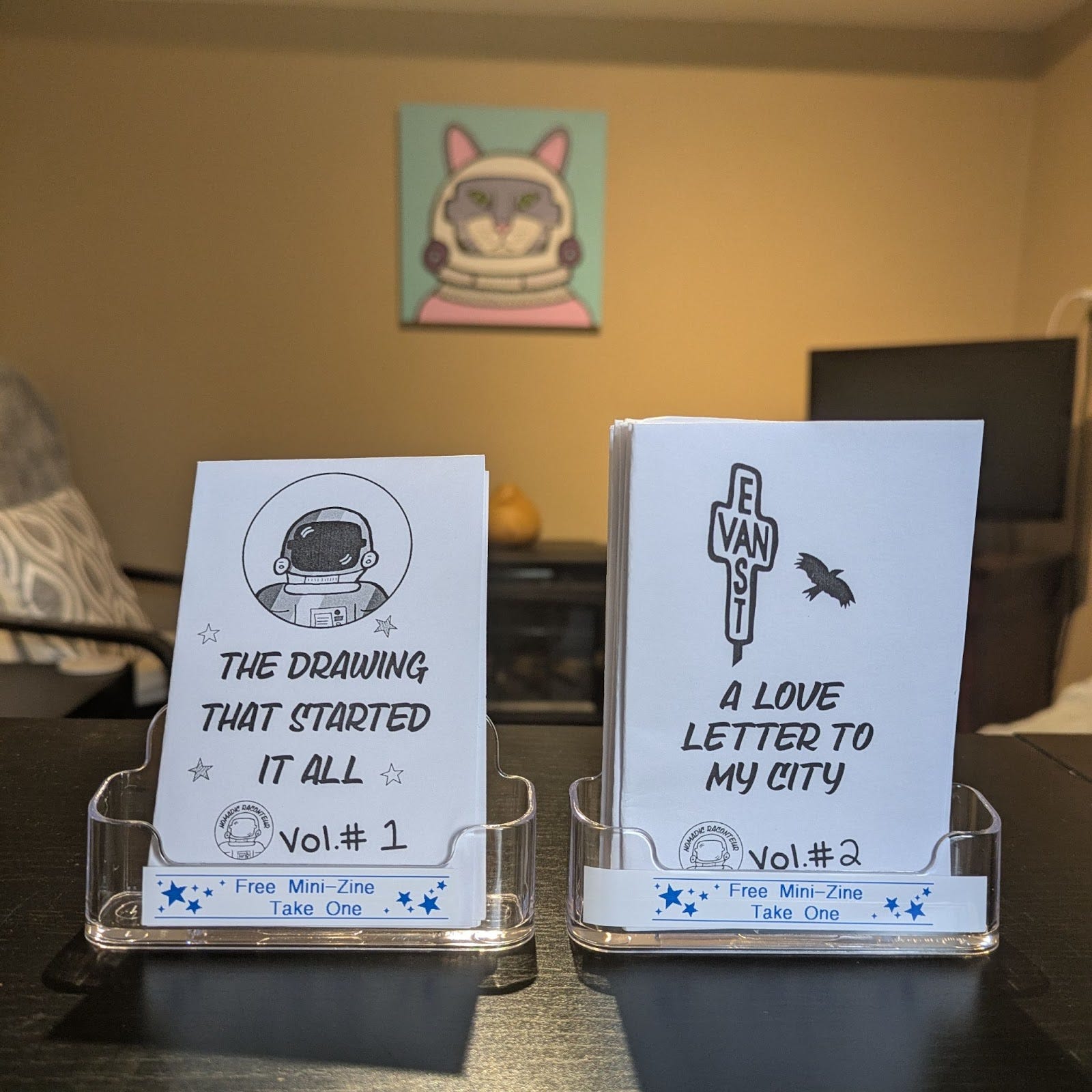
Will this work? I'm not sure, but it's a fun experiment - and there’s nothing I love more than a new challenge.
The Main Takeaway
With all the noise online, bringing your art to people where they already are can be a fun and effective way to get noticed. I'm excited to see how this experiment turns out.
What's an unconventional way you get your work in front of people?